
What Is Compression Therapy and How Does It Actually Work?

If you've ever watched a marathoner zip into a pair of inflatable boots the second they cross the finish line, you've seen compression therapy in action. It looks almost comically low-tech — sleeves that squeeze your legs — but the mechanism behind it is genuinely interesting, and it's one of the most passive, effortless recovery tools you can add to a routine.
At Rejuvenate Mind Body in Glendale, Arizona, compression is one of our most requested sessions, and for good reason: you sit down, the machine does the work, and 15–30 minutes later your legs feel noticeably lighter.
How Compression Therapy Works

Compression therapy uses pneumatic (air-pressure) sleeves that wrap around your legs, hips, or arms. Instead of applying one constant squeeze, the sleeves inflate and deflate in a sequential pattern — starting at your feet and moving upward — which mimics your body's natural muscle pump, the mechanism that normally relies on movement to push blood and fluid back toward your heart.
This matters because after a hard workout, a long shift on your feet, or just a day of sitting, fluid and metabolic byproducts like lactic acid tend to pool in your lower legs. The sequential squeeze-and-release pattern physically pushes that fluid back into circulation, where your body can process and clear it.
This mechanical inflation and deflation mimics the body's natural muscle pump action, the physiological process that promotes blood flow and circulation back to the heart. The technology itself isn't new — pneumatic compression systems have been used clinically since the 1950s, originally to control swelling and prevent blood clots in hospitalized patients, before the athletic community began using them for recovery in the 1990s and early 2000s.
Why Athletes Are Obsessed With It
Ask any recreational runner, CrossFit athlete, or weekend warrior why they compress after training, and the answer is almost always the same: their legs feel less heavy the next day.
Increased circulation from compression is thought to improve muscle recovery and reduce soreness, which is exactly what athletes are chasing when they book a session the day after leg day. Pneumatic compression is associated with decreased soreness, expedited recovery, decreased swelling, reduced muscle stiffness, and improved range of motion.
That said, it's worth being honest with readers here — the research is mixed on how much it moves the needle. A 2021 randomized controlled trial found that intermittent pneumatic compression didn't meaningfully speed up strength or function recovery after muscle-damaging exercise, though it did trend toward reduced perceived soreness, which researchers noted could still hold practical value for athletes. A more recent study in combat sports athletes found pneumatic and cold compression both improved tissue perfusion and muscle elasticity compared to passive rest, with effects still measurable 48 hours later.
The honest takeaway: compression therapy probably won't make you objectively stronger the next day, but the research consistently points to it making you feel less sore — and feeling less sore is often what gets people back to training consistently.
What Compression Feels Like — And Why It's So Popular
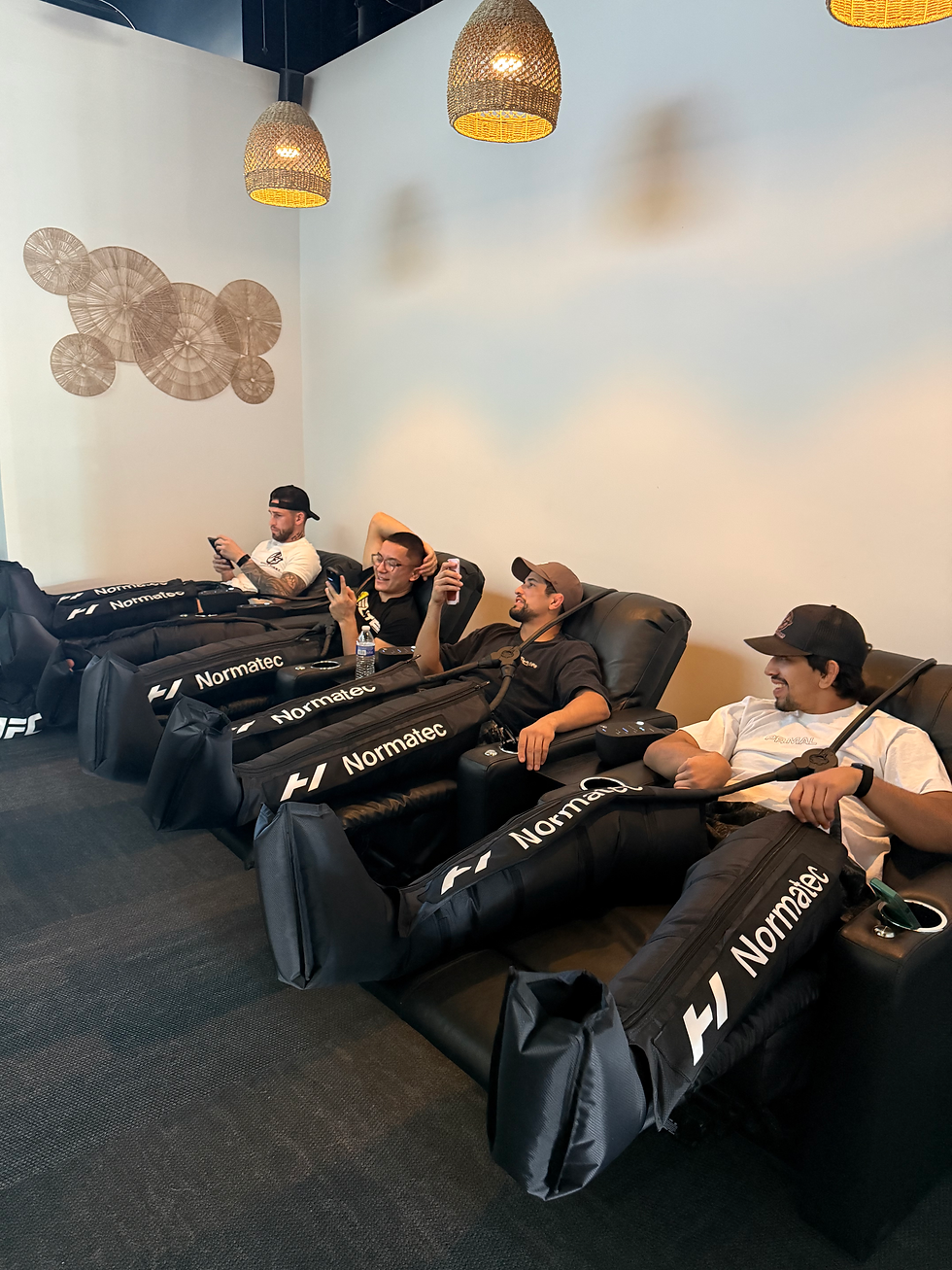
Here in the Phoenix metro, a lot of our members are training outdoors early to beat the heat, then coming in to recover before the day really gets going. Compression is popular precisely because it asks nothing of you. You lie back, the sleeves do their thing, and you can close your eyes or scroll your phone for 20 minutes.
It should feel like a firm, rhythmic squeeze — never painful. Pressure is fully adjustable, and most first-timers are surprised by how quickly their legs feel lighter walking out the door.
Is It Worth It If You're Not an Athlete?
You don't need to be training for a marathon to benefit. Desk workers, people on their feet all day, and anyone dealing with tired, achy legs by evening often notice a difference after one session.
The Bottom Line
Compression therapy works by mechanically pushing fluid and metabolic waste out of your legs and back into circulation, using the same sequential-squeeze principle your body relies on naturally during movement. The research on performance recovery is still developing, but the evidence for reduced soreness and a genuinely relaxing 20-30 minutes is solid — which is exactly why it's become a staple for athletes and non-athletes alike.
If you're curious what it actually feels like, your first visit at Rejuvenate Mind Body is just $25. Come see why your legs have been missing this.


Comments